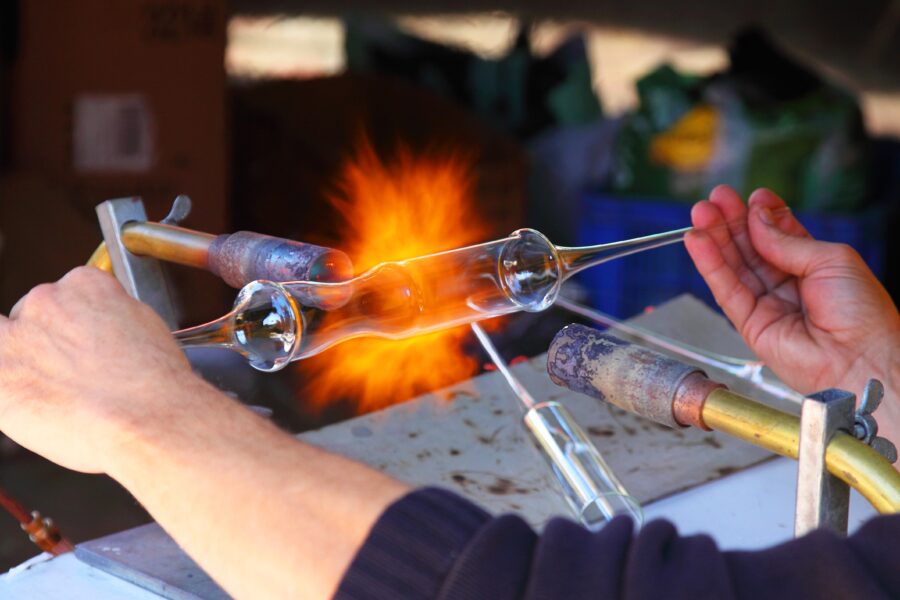
Glassblowing is an ancient art form that combines heat and imagination to create beautiful and functional objects. The art of glassblowing requires the use of a torch, and there are many different types available for glassblowers to choose from. This guide will outline the various types of torches used by glassblowers and their advantages and disadvantages.
Types of Torches
1. Natural Gas Torch – Natural gas torches are fueled by either propane or natural gas, and they produce a large, hot flame. Natural gas torches provide a steady supply of fuel and are easy to use, but they can be expensive and require special attachments and adapters.
2. Butane Torch – Butane torches are fueled by butane, and they produce a hot, concentrated flame. Butane torches are less expensive than natural gas torches, but they can be difficult to control and require frequent refilling.
3. Propane Torch – Propane torches are fueled by propane, and they produce a hot, concentrated flame. Propane torches are less expensive than natural gas torches, and they are easier to control than butane torches, but they can be difficult to light and require frequent refilling.
4. Electric Torch – Electric torches are powered by electricity, and they produce a steady, hot flame. Electric torches are easy to use and do not require refilling, but they can be expensive and require special attachments and adapters.
Advantages and Disadvantages
Each type of torch has its own advantages and disadvantages. Natural gas torches provide a steady supply of fuel and are easy to use, but they can be expensive and require special attachments and adapters. Butane torches are less expensive than natural gas torches, but they can be difficult to control and require frequent refilling. Propane torches are less expensive than natural gas torches, and they are easier to control than butane torches, but they can be difficult to light and require frequent refilling. Electric torches are easy to use and do not require refilling, but they can be expensive and require special attachments and adapters.
Conclusion
There are many types of torches used in glassblowing, and each type has its own advantages and disadvantages. Natural gas torches provide a steady supply of fuel and are easy to use, but they can be expensive and require special attachments and adapters. Butane torches are less expensive than natural gas torches, but they can be difficult to control and require frequent refilling. Propane torches are less expensive than natural gas torches, and they are easier to control than butane torches, but they can be difficult to light and require frequent refilling. Electric torches are easy to use and do not require refilling, but they can be expensive and require special attachments and adapters. Ultimately, it is up to the individual glassblower to decide which type of torch is right for their needs.
1. Hand Torch: A handheld torch that is connected to a fuel source and used for glassblowing. It is the most common type of torch and is used to heat and shape glass.
2. Table Torch: A torch that is mounted on a table or stand and used for glassblowing. It is commonly used in larger scale glassblowing operations.
3. Penn Torch: A torch specifically designed for glassblowing that is used to heat and shape glass. It is often used in combination with a hand torch.
4. Furnace Torch: A large torch that is used to pre-heat the glass before it is shaped. It is often used in larger scale glassblowing operations.
5. Propane Torch: A torch that is powered by propane and used for glassblowing. It is often used for smaller projects or for students just starting to learn glassblowing.
Glass Blowing Torches: What Type of Torch Should You Use?
There are a variety of torches available for glass blowing, and the type you should use will depend on the size and type of glass project you’re working on. In general, you’ll want to use a torch with a large flame and a high BTU rating. This will provide enough heat to melt and manipulate glass with ease. The most commonly used torches are propane or natural gas torches with oxygen. Some also use acetylene torches.
Propane or natural gas torches are usually the best choice for most projects. You can adjust the flame size and intensity, and they’re generally inexpensive. The downside is that they don’t get quite as hot as an acetylene torch.
If you’re working on larger projects or need to work with more intense heat, an acetylene torch is the way to go. This type of torch gets hotter than propane or natural gas and is more expensive. It’s also more dangerous and requires more safety precautions.
No matter what type of torch you use, make sure you have the right safety equipment and that you follow all safety instructions when working with glass.
The 3 Types of Torch Explained: Flashlights, Headlamps and Spotlights
1. Flashlights: Flashlights are handheld torches that are powered by one or more batteries and use a bulb to produce light. They are the most common type of torch and are used for a wide range of tasks.
2. Headlamps: Also known as head torches, headlamps are strapped to the head and are ideal for hands-free illumination. These torches usually use a combination of LED and halogen bulbs and are perfect for walking, running, camping, or any other activity that requires both hands.
3. Spotlights: Spotlights are powerful torches designed to project a beam of light over a large area. These torches are typically powered by rechargeable batteries and can be used for search and rescue operations, hunting, or any other activity that requires a large amount of light.
Two Types of Torches Explained: Learn the Difference
A torch is an important tool used in many applications, from recreational activities to industrial work. There are two main types of torches used today: gas torches and electric torches.
Gas torches use a combustible gas, such as propane or butane, to create an open flame. They are popular for outdoor activities such as camping, welding, and metalworking. They are often portable, allowing for convenient use in a variety of settings.
Electric torches, on the other hand, use electrical current to create heat. They are typically used in indoor applications such as soldering or heating metal. They are not as portable as gas torches, but they are often more precise and efficient.
Gas torches are typically less expensive and easier to use, while electric torches are more expensive and require more skill to operate safely. It is important to consider the limitations of each type before making a purchase. For example, gas torches are not suitable for use in enclosed spaces due to the risk of carbon monoxide poisoning. Electric torches, on the other hand, require access to an electrical outlet, which may not always be possible in certain locations.
The Differences Between Burners and Torches in Glassblowing Operations
Burners and torches play a vital role in glassblowing operations. They provide the heat that is necessary to shape and form glass into different shapes and sizes. Burners and torches are two different tools used for this purpose, and each has its own unique features and advantages.
Burners: Burners are tools that use a flame to heat up glass. The flame is typically produced by a fuel source such as propane or natural gas, and is then directed through a nozzle. This allows the flame to be directed in a specific area, allowing the glassblower to manipulate the shape of the glass. Burners are typically used for large-scale glassblowing operations that require a large amount of heat and precision.
Torches: Torches are tools that use an electric arc to heat the glass. The electric arc is generated by an electric current, which is directed through a nozzle, and then directed towards the glass. This allows for more precise heating of the glass, as the heat is more concentrated and can be more easily controlled. Torches are typically used for smaller, more intricate glassblowing operations that require more precision and control.
Both burners and torches are important tools for glassblowing operations, and each has its own unique advantages and features. Burners are better suited for larger operations, while torches are better for smaller, more precise operations. Ultimately, the type of tool chosen should be based on the size and complexity of the glassblowing operation.
This article provides a comprehensive overview of the different types of torches used by glassblowers. It is important to remember that each type of torch has its own unique set of benefits and drawbacks, so it is important to consider your needs carefully before making a purchase. Additionally, it is important to ensure that you follow the proper safety protocols when using any type of torch. With the right tools and knowledge, anyone can become an expert glassblower!